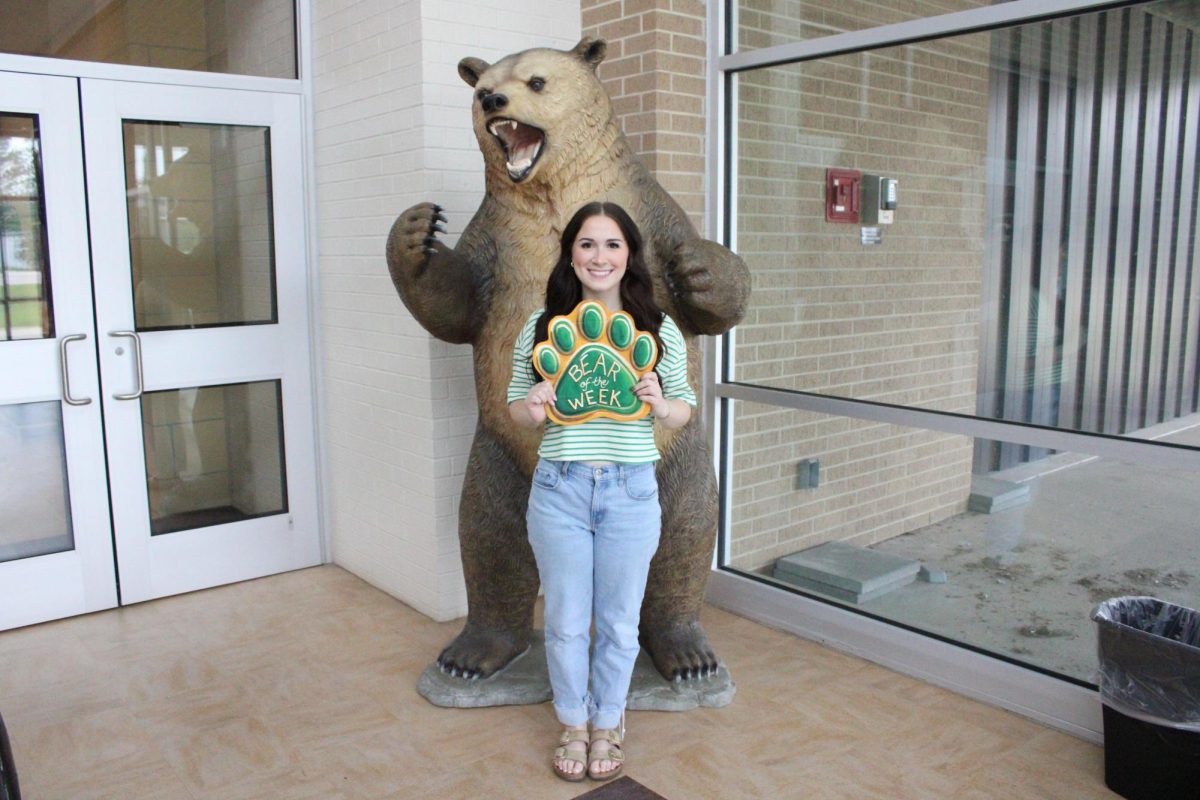
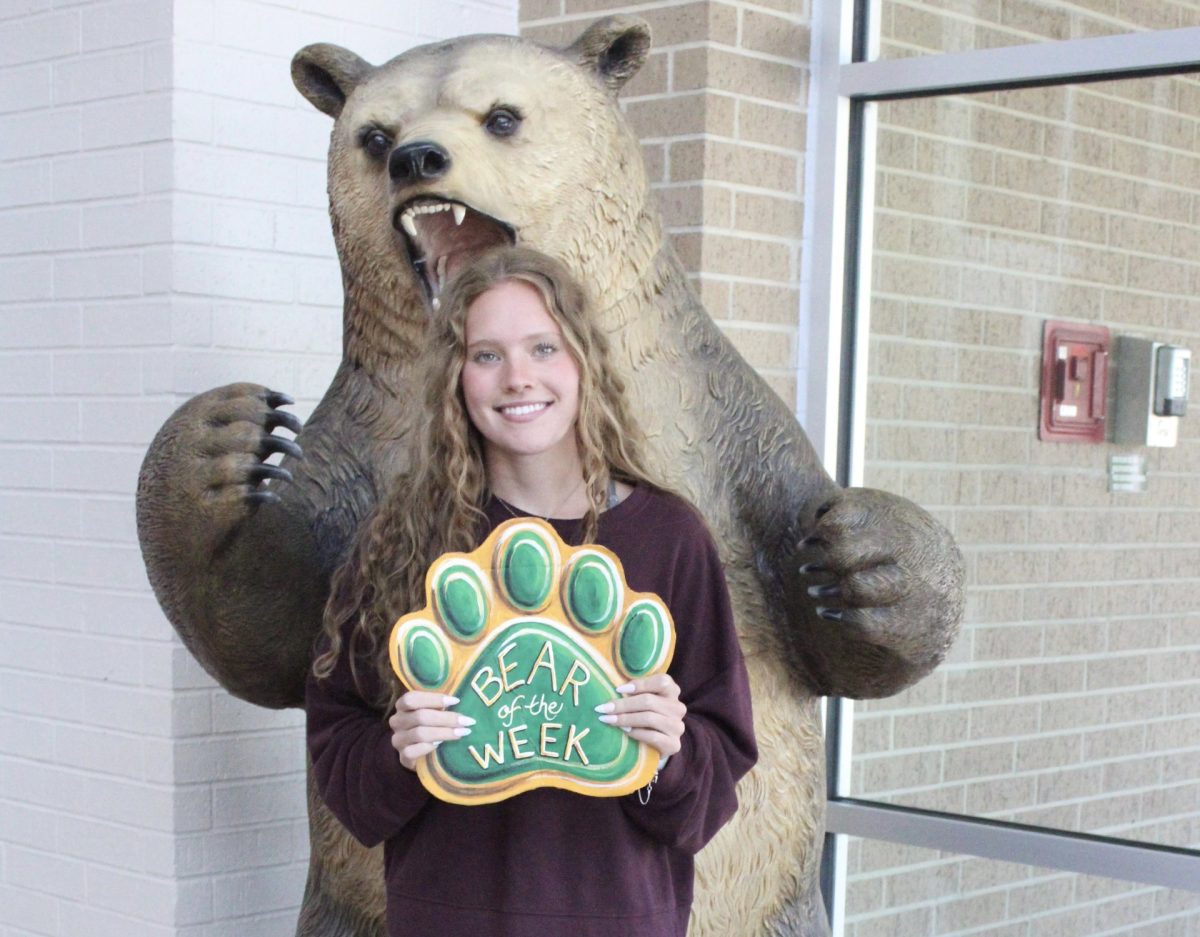
Across 34,000 miles of shoreline, the wild coasts of Alaska include fjords, rocky coastline, intertidal zones, and tundra cliffs. This breathtaking terrain is teeming with life, with big humpback whales, small sea otters, walrus, marine invertebrates, shore birds, and various fishes, just to name a few of these animals. Between the frigid cold and almost 20 hours of darkness daily, Alaska is like a fever dream few people from out of state would live in; for senior, Cameron Simoneaux, it is something she is looking forward to.
She was recently was accepted into the University of Alaska Fairbanks (UAF) and will be studying Marine Biology and Environmental Science. Simoneaux will be attending in the fall of 2026. She wants to take this route of study because she wants to make a difference in the world.
“I want to attend the University of Alaska Fairbanks because it offers opportunities that are very different from most universities,” Simoneaux said. “Located in Fairbanks, the school gives students the chance to study and experience the artic environment firsthand.”
University of Alaska Fairbanks is mostly focused on science, research, and understanding the Artic. Due to the location, students are able to study things like climate change, the Artic wildlife and northern agriculture. According to Simoneaux, because of the location of UAF, students are able to study things like climate change, Artic wildlife, and northern agriculture in ways that most other universities cannot offer. UAF is also home to the International Artic Research Center, giving scientists the ability to get more involved. Students going to this school get to experience the artic first-hand, get opportunities to be involved in field-work and internships, and explore nature and apply what they are studying to real-life situations.
“Life at UAF is also special because of the natural beauty that surrounds the campus,” Simoneaux said. “Students can go hiking, skiing, or even watch the Aurora Borealis, also known as northern lights. Overall, UAF offers students a chance to grow academically while experiencing a one-of-a-kind environment that encourages curiosity, discovery, and adventure.”
According to Simoneaux, the natural environment is a big reason why she wants to go there; the forests, wildlife, and wide-open landscapes create an ideal environment for someone of her study to live in. Alaska is also home to a lot of culture, and many communities with strong traditions and deep connections to the land. Bring in a place with such rich culture helps with personal growth and to develop an understanding of how culture and the environment are connected.
“Studying in a place surrounded by nature would constantly remind me why protecting the environment matters,” Simoneaux said. “Overall, I believe UAF would give me the chance to grow academically and personally while learning in one of the most unique places in the world.”
A positive of going across the country to the University of Alaska Fairbanks having the chance to learn in a different environment. Being in Fairbanks gives the students going there the opportunity to study Artic ecosystems, wildlife, and environmental changes right in the place that they are happening. Students get to see first-hand the Artic landscapes. A con of going all the way to Alaska is the sheer distance between Texas and there. Moving there would mean leaving behind friends and family, the warm weather, and the place she calls home. Being so far away makes holidays and other important things much harder to get to. It would be very different than what she is used to.
“Even with these challenges, the opportunities for learning, exploration, and personal growth make UAF a place that could offer an unforgettable college experience,” Simoneaux said.
According to Simoneaux, the ocean and natural environment support life on the planet. However, they are constantly being damaged by climate change, pollution, and human activity. She personally believes that fields like marine biology and other environmental sciences are becoming important as ever, because people are becoming less and less concerned with the environment and the long-term consequences of not taking care of it. To her, it feels like the study of protecting the worlds’ oceans is becoming increasingly overlooked.
“I believe someone needs to care enough to speak up for them and work toward solutions,” Simoneaux said. “Through Marine Biology and Environmental Science, I hope to better understand how ecosystems work and how they can be protected. My goal is to contribute to research, conservation efforts, and education so that future generations can still experience the beauty and importance of our oceans and natural environments. I want to be apart of the group of people who chooses to take action.”
After college, Simoneaux hopes to begin a career in conservation. After getting experience in the field, she hopes to eventually earn her PhD in Marine Biology. Achieving that goal would allow her to lead larger research projects, contribute to scientific discovers, and make an even greater impact in the field of marine conservation.
“Even though I am excited about the opportunity to leave and explore somewhere new, Orange will always be my home,” Simoneaux said. “It is the place where I grew up, where my memories are, and where many of the people who shaped me still are. At the same time, I know that leaving home is also apart of growing up. Eventually everyone has to spread their wings and venture outward in order to discover new opportunities and learn more about themselves. The lessons, values, and memories I gained here will go with me wherever I end up. In the end, leaving is not about forgetting where I came from– it is about using those roots to grow into someone greater.”