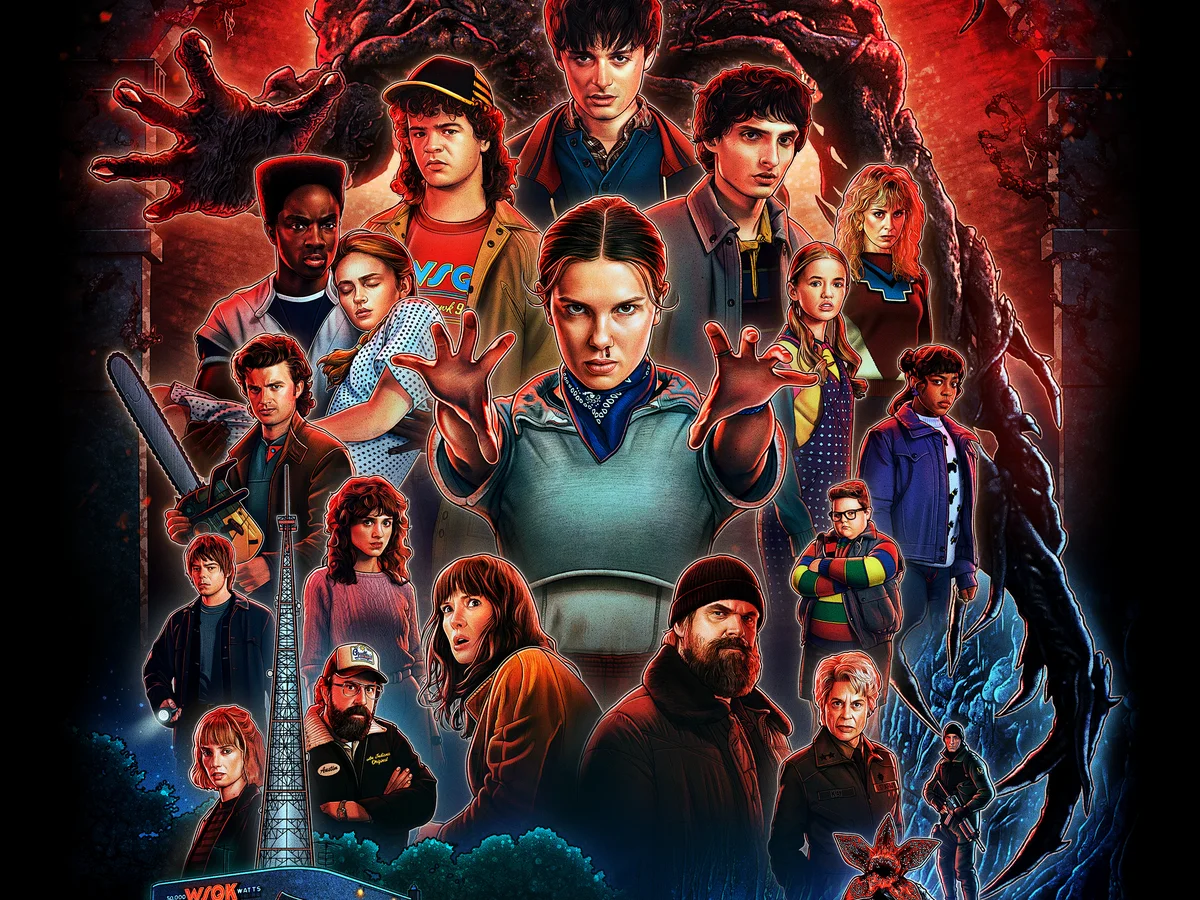
Netflix’s hit show “Stranger Things” just wrapped up its final season on Dec. 31 after running for nearly ten years since it first aired on July 15, 2016.
Stranger Things is a sci-fi/horror series created by the Duffer Brothers. Set in the 1980s in the town of Hawkins, Indiana, the show cohesively blends coming-of-age and nostalgic storytelling with supernatural horror and government conspiracies.
The series finale resolved the Upside Down storyline and provided the fans with closure for long running character arcs. It delivers an emotional, high stakes conclusion to one of Netflix’s most influential shows.
Season five continues around eighteen months after season four. The stakes this season are much higher than the last one as events threaten not only the town, but the world, and even the lives of the characters themselves.
The main crew is trying to adapt and find a sense of normalcy after the tragic events of the previous season, which left Hawkins physically and emotionally fractured. The group ventures into the Upside Down to search for the main antagonist, Vecna, hoping to finally put an end to his master plan, one whose full scope they do not yet entirely understand. As the season unfolds, mysteries that have kept the fandom on edge since season one are finally revealed and resolved.
The main protagonist, Eleven, grew considerably this season, enhancing her powers by training consistently. Emotionally, she matures significantly, as she struggles with her identity and sense of responsibility. In this season she, along with the other characters, faces their biggest emotional and moral challenge yet.
Will Byers is another character who develops extremely well. He finds himself and learns to become comfortable in his identity. He also becomes increasingly important to the series this season, playing a key role in the fight against Vecna and his demogorgons.
The major themes this season are good versus evil, friendship and unity, trauma and healing, sacrifice, and the transition from childhood to adulthood. These main themes help to bring the series full circle, reflecting on the ideas and concepts from season one.
The Duffer Brothers balance humor, emotion, and tension in their story. The production quality has increased immensely, with cinematic visuals, detailed sets, and heavy use of practical and digital effects. Music also plays a crucial role in the show, heightening emotion and suspense through synth-heavy scores inspired by the 1980s.
One issue that many fans have with the finale is how short, and even underwhelming, the final battle was. While the showdown with Vecna was all in all executed well, some fans expected a longer, more intense climax, leaving a part of the fandom unsatisfied.
Overall, the series finale ends beautifully and perfectly conveys the end of childhood magic and the transition into adulthood. The characters wrapped up their childhood adventures and now must move on to discover what their futures entail.