Students’ experiences in school can be heavily shaped by what scheduling system their school uses. Many opinions are split on which system works best—from having to juggle eight shorter classes a day to sitting through four longer periods.
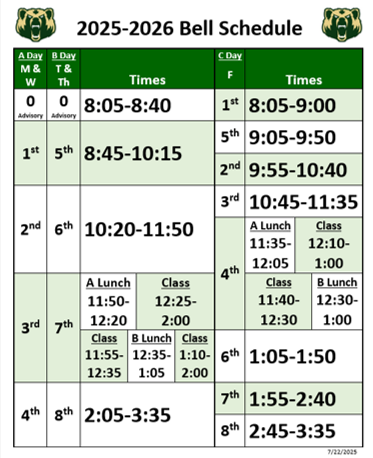
With an eight period schedule, students attend all their classes each day for an entire week. These class periods are usually around 45-50 minutes of the day. On the other hand, the block schedule (LCMHS current schedule) consists of four classes per day, with each class lasting around 90 minutes. These classes alternate throughout the week.
The eight period schedule has many advantages such as, daily exposure to each subject, shorter class periods, and an easier schedule. Being in the same classes every day can allow for greater consistency in learning throughout the school week. Students can also stay more attentive with the shorter periods, allowing them to remain focused during lessons. Having eight periods a day can also be easier scheduling wise. Scheduling changes are less likely to affect the whole week.
However, there are disadvantages to an eight period schedule. Students may feel rushed or more stressed, and there is limited time for in-depth discussions, labs or projects. Attending every class every day can lead students feeling overwhelmed. Homework might pile up if the student has obligations outside of school. With the classes being shorter teaches are not able to have deeper discussions about certain material. If students are needing more help that could be difficult to do on a time crunch. It also leads to less time for fun experimental labs and group projects.
The block schedule also offers many benefits, such as fewer daily transitions, more in-depth lessons, and less homework in a day. Having fewer transitions throughout the school day can help students not feel rushed. It also allows for teachers to dive deeper into their lessons while also having more time for in-class assignments. Students are less likely to be stressed when there are only four class periods in a day compared to there being eight.
While there are many advantages to having a block schedule, there are also some drawbacks. With classes being longer and students attention span decreasing, it can be a struggle for them to maintain focus. Because classes alternate, students may struggle to remember what they had learned the other day. It can be easier for them to forget material that was taught in the last class period.
Factors that school administrators consider when choosing a schedule include academic performance, student well-being, and teacher feedback. Schools adjust to what schedule fits them the best and their basic needs; there is no one-size-fits-all solution.
As this discussion continues on which scheduling system is better, both students and teachers agree that the effectiveness of any schedule depends on how well it supports learning, engagement, and balance throughout the school.